
Why the plate is useful
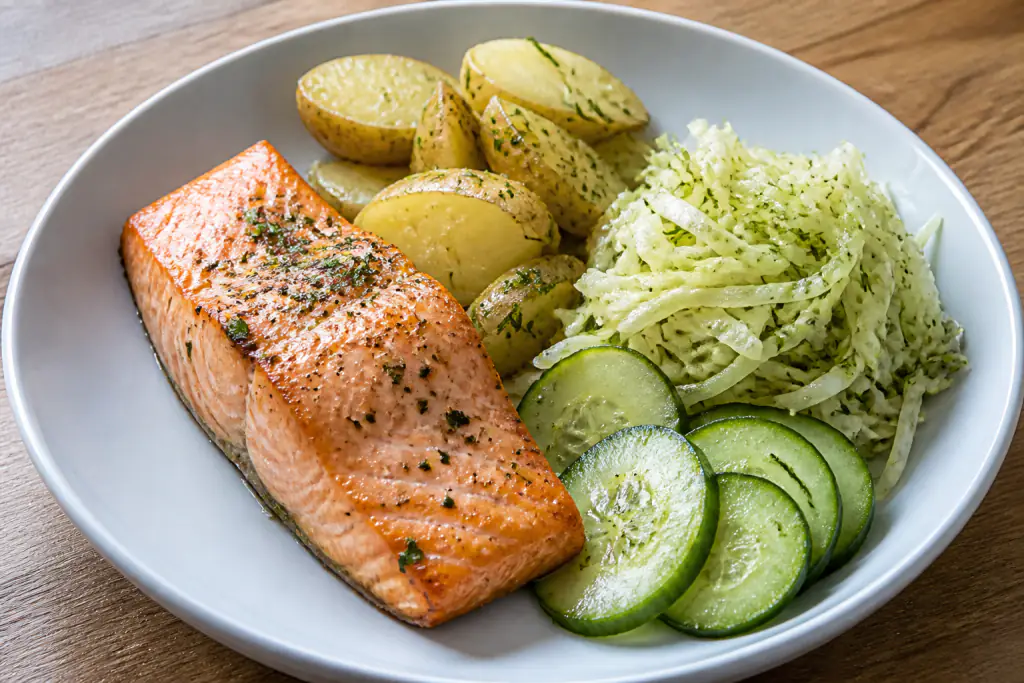
Salmon provides protein and omega-3 fats, while potato, cabbage, and cucumber keep the plate structured and satisfying.
Keep sodium controlled
The heart-conscious version should use herbs, olive oil, and texture rather than salty sauces, cured fish, or heavy packaged seasoning.
Safety checks
Fish-allergy users should avoid it, pregnancy users should follow fish-selection guidance, and kidney-condition users may need protein and mineral review.
Chef tips to make it work
Taste should not disappear when a recipe becomes healthier. Use heat control, layered seasoning, texture contrast, correct doneness, and mistake recovery tips so the final dish feels intentional.
- Fix too much salt by diluting with unsalted ingredients, expanding the batch, or balancing carefully with fat or acid where suitable.
- Avoid burning aromatics by reducing heat before garlic, keeping liquid nearby, and stirring during high-heat stages.
- Use doneness cues: rested steak, flaking fish, safe chicken, soft dal, separated rice grains, and crisp-tender vegetables.
FAQs
Can potatoes fit heart-conscious meals?
Yes, when portions, cooking method, sodium, and the rest of the plate are handled well.
How should salmon be cooked for recipe safety?
Cook it fully to a safe flaky texture and avoid cross-contact for fish-allergy users.