
Ugandan-Inspired · Dinner
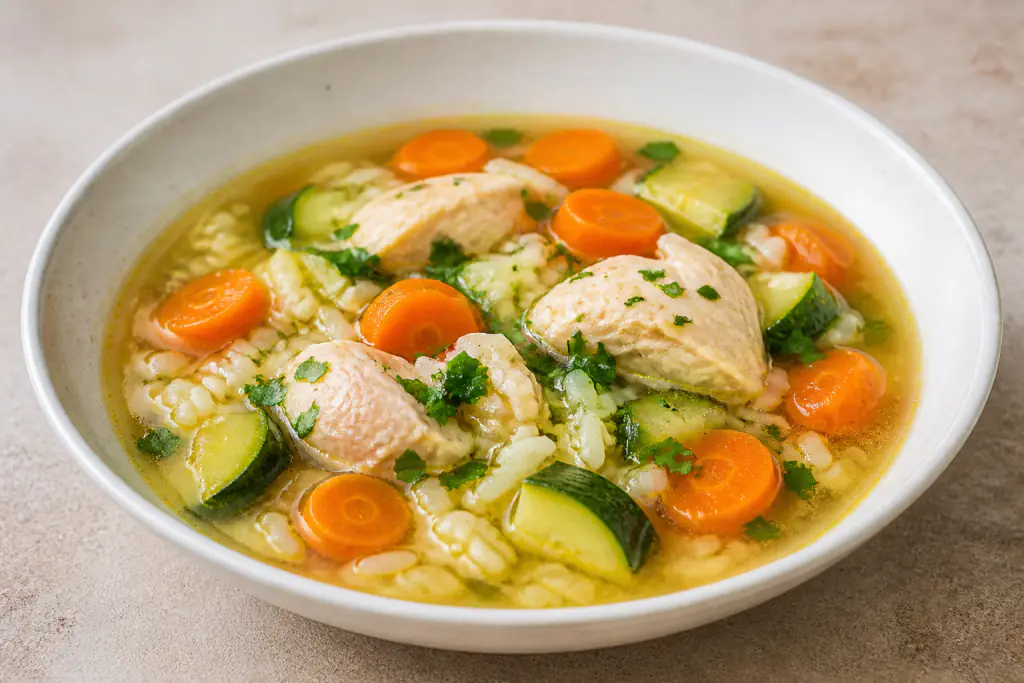
Ugandan-Inspired GERD-Aware Chicken Rice Carrot Soup
GERD-Aware Chicken Rice Carrot Soup adapted with greens, sweet potato, rice, beans, and gentle stew notes. It keeps nutrition facts, allergens, source notes, and health cautions visible for safer meal planning.
Key facts
Best fit
A lower-acid soup pattern for reflux-sensitive dinners when tomato, citrus, mint, and heavy chili are avoided. Cuisine-specific flavor comes from greens, sweet potato, rice, beans, and gentle stew notes.
Ingredients
- chicken
- rice
- carrot
- zucchini
- parsley
Nutrition facts
Ingredient details and substitutions
chicken
Role: lean protein and savory depth
Taste/use: Mild and savory; takes well to herbs, ginger, cumin, citrus, and broths.
Best swaps: Use tofu, paneer, fish, turkey, egg, or lentils depending on diet.
Health fit: Useful for high-protein, diabetes-aware, PCOS-aware, and weight-management meals.
Caution: Cook fully and avoid cross-contamination with raw poultry.
rice
Role: comforting base and carbohydrate structure
Taste/use: Neutral and soft; jasmine is fragrant, basmati is lighter, brown rice is nuttier.
Best swaps: Use millet, quinoa, cauliflower rice, or a half-rice blend depending on carb goals.
Health fit: Useful as a clear measured base, especially with protein and vegetables.
Caution: Diabetes, PCOS, and weight-management users should keep portions measured and pair with protein, fiber, and vegetables.
carrot
Role: sweet crunch, color, and vegetable volume
Taste/use: Sweet and earthy; crisp raw and sweeter when cooked.
Best swaps: Use pumpkin, sweet potato, bell pepper, zucchini, or squash.
Health fit: Good for fiber, color, and lower-sodium flavor building.
Caution: Usually low risk; diabetes users should still count total meal carbohydrate.
zucchini
Role: gentle vegetable volume and moisture
Taste/use: Mild and slightly sweet; best sauteed, roasted, or spiralized.
Best swaps: Use bottle gourd, chayote, cucumber added late, or spinach.
Health fit: Useful for GERD-gentle, lower-calorie, and lower-carb volume.
Caution: Usually low risk; avoid overcooking into watery mush.
parsley
Role: freshness and herb flavor
Taste/use: Clean, green, and lightly peppery; best added at the end.
Best swaps: Use cilantro, basil, dill, mint, or scallion greens.
Health fit: Useful for lower-sodium finishing flavor.
Caution: Usually low risk; users on specific medication restrictions should follow clinician advice.
Step-by-step method
- Prep chicken, rice, carrot, zucchini before heating so the dinner cooks evenly.
- Simmer chicken, rice, carrot, and zucchini in unsalted broth until tender, then finish with parsley for freshness. Keep the ugandan-inspired profile focused on greens, sweet potato, rice, beans, and gentle stew notes.
- Cook until the chicken is tender and the main protein or plant protein is fully cooked.
- Taste at the end and adjust with herbs, measured salt, gentle acidity, or water depending on the health goal.
- Portion clearly before serving so the nutrition facts match the plate.
Who should avoid or modify
- GERD users should keep tomato, citrus, mint, heavy chili, and fried garnishes out of the soup.
- Diabetes users should keep rice portions visible and add more non-starchy vegetables if needed.
- Kidney-condition users should review protein, potassium, phosphorus, and sodium targets.
Chef tips
- Skim excess surface fat so the soup stays lighter.
- Cut carrot and zucchini evenly so they soften together.
- Use parsley and gentle browning before increasing salt.
How to make it suitable
- GERD version: keep the base tomato-free, citrus-free, chili-free, mint-free, lower fat, and portioned away from late-night large meals.
- Diabetes-aware version: use a smaller starch portion, add extra non-starchy vegetables, and avoid sweet sauces.
- High-protein version: keep the protein portion visible and avoid replacing it with extra starch.
- Low-sodium version: reduce salty sauces, stocks, pickles, and packaged seasonings, then finish with herbs or gentle spice.
- Vegetarian or vegan version: swap animal protein for tofu, tempeh, lentils, beans, chickpea tofu, paneer for vegetarian users, or extra vegetables plus seeds where tolerated.
- Allergy-aware version: replace flagged allergens with role-matched swaps and verify labels, sauces, spice blends, and cross-contact risk before serving.
Research sources
FAQs
Is Ugandan-Inspired GERD-Aware Chicken Rice Carrot Soup good for meal planning?
Yes. It has a clear prep time, cook time, nutrition profile, ingredient list, and health notes, so it can fit a weekly plan with the right portions.
Can this recipe be changed for allergies?
Yes. The current ingredient list does not flag the main tracked allergens, but users should still verify packaged ingredients and cross-contact risk.
What research supports the health cautions on this page?
This page uses public guidance from NIDDK GERD diet and trigger guidance, FDA sodium nutrition label guidance, CDC diabetes healthy eating and carb planning, NIDDK kidney disease nutrition guidance and keeps health language conservative. It is still food guidance, not medical care.
Related recipes
Safety note
This recipe provides food guidance only. People with severe allergies, kidney disease, pregnancy-related needs, eating disorders, or medication-linked restrictions should confirm plans with a clinician.